
Stories are the Strategy
A conversation with Allison Begalman and Heather Fipps, the co-founders of the Hollywood Climate Summit, about building the cultural infrastructure that helps people move from audience to participant.

What led you to start the Hollywood Climate Summit?
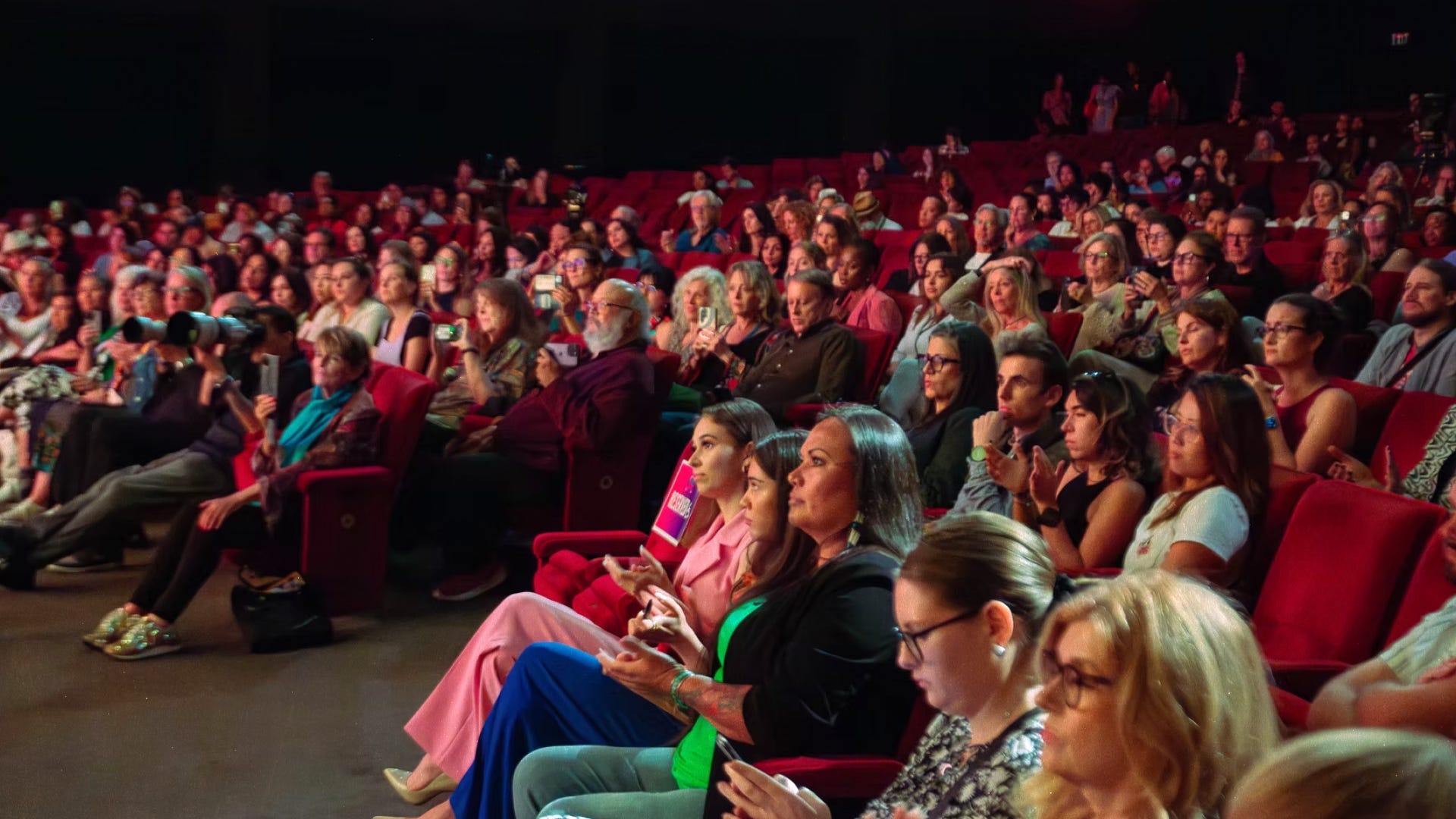
AB: We were seeing a lack of understanding of climate across the media ecosystem, and just a lack of mentions of climate across media as a whole. There had been some work within the entertainment industry to start moving things forward in terms of sustainable production and messaging, but there needed to be a lot more, and it needed to be more accessible to all types of professionals. We had the first [event] in 2020. It was originally supposed to be in person, and then COVID happened, so it went virtual. That ended up being an awesome opportunity because we hit people all over the world with the programming.
Each year we were able to expand until we built a partnership in 2023 with the Academy of Motion Picture Arts and Sciences, which leveled up the programming and the [gave us the] opportunity to bring in people who may not have even associated with the word “climate” or understood how it intersects with their work.
I’ve watched the summit grow over the last couple of years. This year you have a grant for filmmakers and launched Context Collaborative. I would love to know more about that.
HF: A lot of what happened for us is that we started with the conference as our main program, but more and more we started offering year-round programming — a Writing Climate Pitch Fest, a marketplace connecting independent films with distributors through American Film Market. That growth led us to found Context Collaborative as a new nonprofit.
AB: We see Context Collaborative as a brand we can bring to events nationally and internationally, helping other people build their own climate entertainment hubs in their own professional language.
HF: Underneath it we have several programs. Community building is where the Hollywood Climate Summit continues to sit. Collaborations is where we’re building partnerships with other sectors.
Colliders brings together our two main communities — the advocacy side (climate experts, researchers, policymakers, lawyers) and the creative side (game developers, writers, screenwriters, social media creators, film and television) — for focused think tanks on specific issues. This year we’re looking at public transit, bridging, and democracy.
And the Catalyst Program covers professional development: this year we have a pitch competition with Who Let The Docs Out offering a $50,000 grant to the winner, plus an annual grant for filmmakers with climate themes in partnership with New Filmmakers LA.
AB: And campaigns. That’s actually how I started doing this work. My background isn’t in climate specifically, it’s in entertainment, community organizing, and social impact. I kept seeing climate intersecting with everything, and folding that campaign work into Context Collaborative means we can say clearly: this is what we’re focused on. Having an issue focus matters. You build deeper relationships, you understand the nuances, you know which strategy fits which moment.
We have two active campaigns right now. One is for a film called The [Conserv]atives, about conservative climate leaders in faith communities and political spaces — people who talk about this through the lens of conservation rather than the mainstream environmental movement framing. The other is The Here Now Project, focused on climate preparedness and international stories of people experiencing climate in real time — someone hosing their roof during a wildfire, communities dealing with heat domes in Canada. It’s about creating that global connection and showing what it feels like to watch someone experience this through a selfie video.
I think there’s this funny thing that happens where people who work in film and television sometimes don’t see themselves as having a role in climate work, and climate people don’t really see themselves in film or television either. So the work you’re highlighting is such a good example of how they go hand-in-hand.
You get to see so many different climate stories. Is there anything that stands out to you, or anything that’s left an impression?
HF: Working on The [Conserv]atives has affirmed something I’ve known for a long time. I grew up in a mostly conservative community, a small ski resort town where natural resource changes entirely impacted cost of living, housing, fire season evacuations. My environmental values came from that place, from living in a face-to-face relationship with nature. The environmental impacts were very real, and so were the values. But how people are invited to feel part of what gets called the climate movement, a lot of people have not felt brought along in that journey, even if at a core level they agree. And there are so many valid and understandable reasons for that.
What we can say is that there is a lot of incredible work happening in local communities, rooted in care for where you live, where your family is growing up, land you may be living on or owning as a rancher or a farmer, faith-based communities interpreting scripture as creation care and as a responsibility to nature. There [are] a lot of environmental values in the undercurrent, even if the political headlines are extremely polarizing.
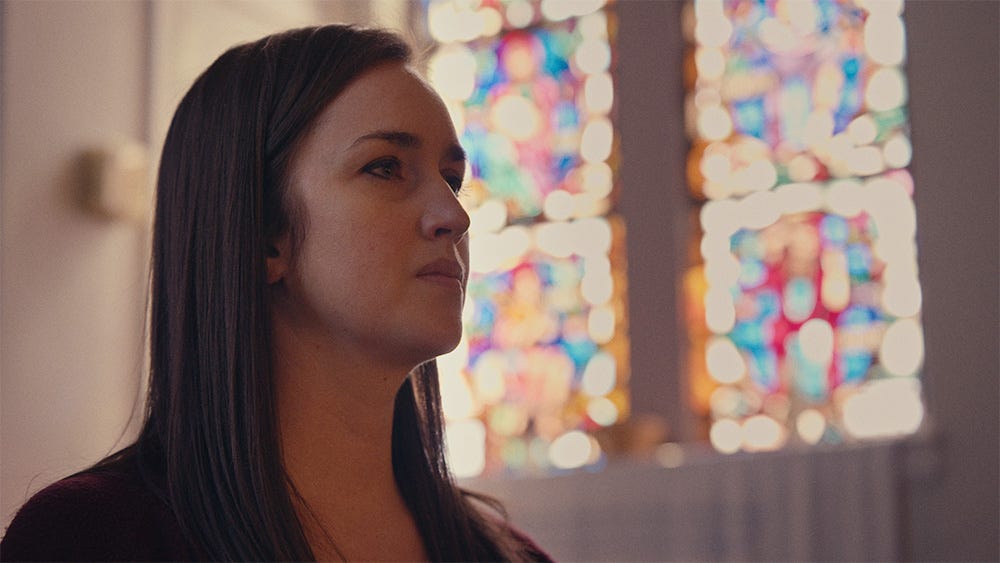
The more we can find really specific examples — like the pushback on data centers, or the cross-ideological collaboration around public lands this year, people in conservative communities saying “absolutely not, hands off our public lands” and really activating around that — the more we see these foundational issues that a lot of people will show up for.
Are they calling themselves part of a climate movement? No. But it is a language thing. What we’ve learned from audience message testing is that even relatively apolitical language, nature, environment, climate, just reads as political for people at this point. The more we can get specific and place-based, clean water, clean air, public lands, regenerative farming, the more that cuts across without people putting up their guardrails around “you’re asking me to join a political movement I don’t fully align with.”
That purity test, the idea that you have to agree on everything in order to agree on this, is what we’re really trying to expand more nuance around.
Do you think joy has a role in climate storytelling?
HF: I think about the role of joy and optimism very pragmatically. The two biggest cultural blockers we’re facing are apathy and fear. People who feel like we’re doomed, so why bother. And people who feel like speaking up is too risky, that if you don’t say it perfectly you’ll be shamed, or your employer will tell you to take it down.
Joy-forward storytelling pushes back against both of those. It creates a culture of courage and normalization. I think about the Zach Galifianakis show This Is a Garden. Urban gardening, food growing, community gardens — that is a genuine climate solution, and it’s joyful and community-oriented.
Similarly, creators like Alexis Nicole Nelson, Black Forager, brings that spirit of discovery and connection with nature to a huge audience. That’s essential. Because once you cross that threshold, you realize: there is so much happening. So many people [are] doing incredible, complicated, nuanced things. That is such a better place to be than sitting alone thinking nothing is possible.
How would you describe the Hollywood Climate Summit to someone who's curious but isn’t sure if it’s right for them?
HF: It’s for anyone who cares about climate and is looking for better ways to engage people on it, nonprofit communicators, policymakers, lawyers, anyone who feels like nothing is cutting through and doesn’t want to keep reinventing the wheel. And anyone in the creative field who thinks, “I care about this but there’s nothing for me to do.” Whether you’re a property master, an art director, a VFX designer, a sound mixer there is an on-ramp for how your specific role can integrate climate consciousness into what you’re already making. Where you are is the most important place to be.
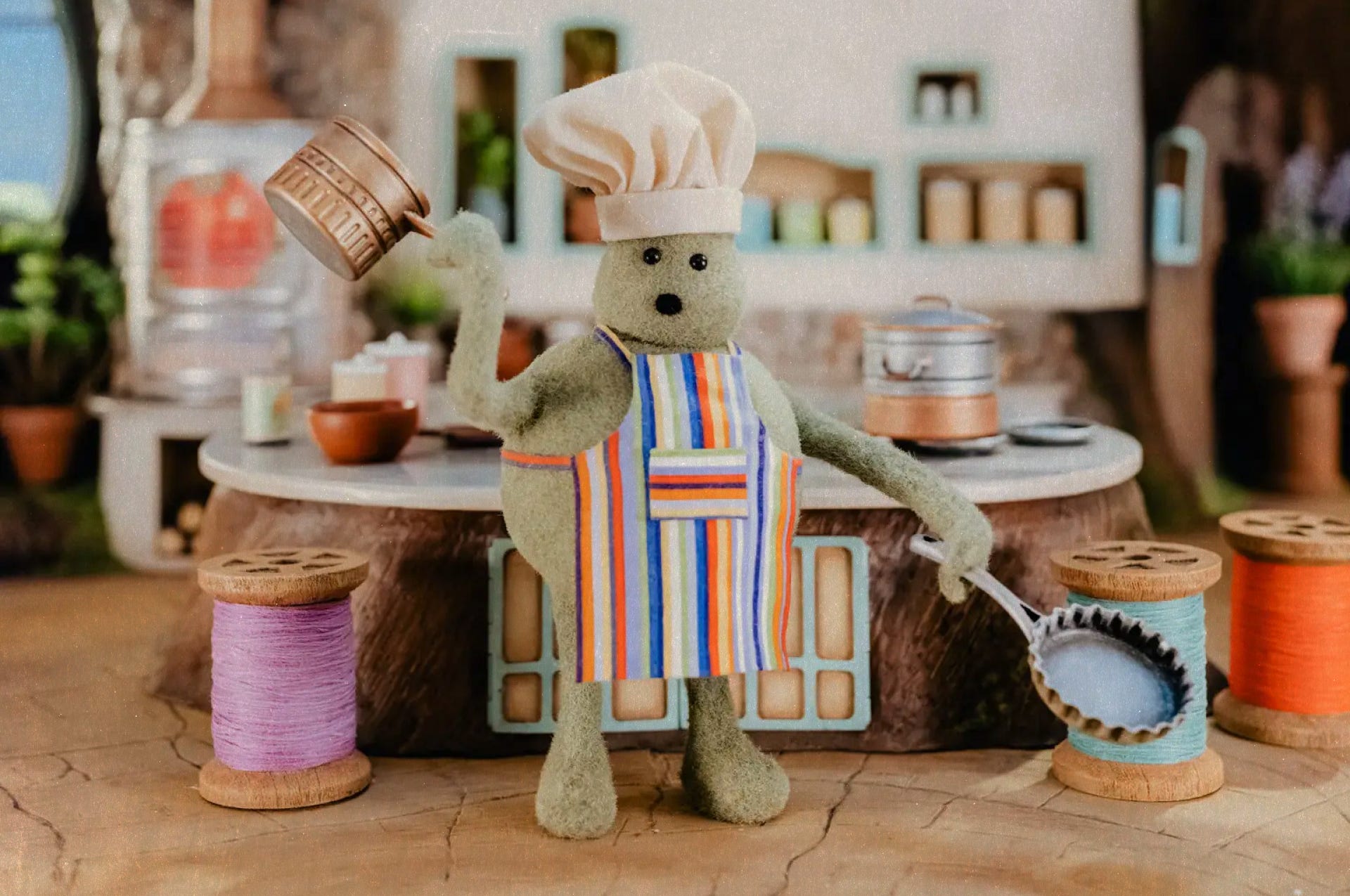
AB: This year our programming is a lot more specific, every conversation has a sub-issue through line. Some are very climate specific, some are broader: AI, world building, food systems, microplastics. We even have the team behind Tiny Chef coming to talk about food, identity, and how to de-stigmatize plant-based eating in a way that feels fun and community-oriented rather than, like, radical activist energy.
I’d also add: with AI, people are scattered and don’t know what to trust. We all just need a vetted space where you can step back, learn from people you know are legitimate, and build real relationships. Let us facilitate the experience, you don’t have to think about anything except signing up and arriving. You can even take the metro now. There’s a station right down the street.
And practically: we have scholarship tickets, and we honor about 95% of applications. If you can’t pay, come anyway. There’s also a virtual option. People always leave with these little groups. I’ll run into someone at a festival months later and they’ll say “I still hang out with my people from the summit.”
So you’ll leave with at least one new friend.
AB: Guaranteed.
Or your money back.
Allison: (laughs) Unless you won a scholarship ticket.
The Hollywood Climate Summit takes place June 4th. Scholarship tickets and more information at www.hollywoodclimatesummit.com. Awards nominations are open through June 22nd — categories include climate games, unscripted shows, podcasts, and more, with the award show in November in Los Angeles. Follow on Instagram or sign up for the newsletter for updates.
Heather Fipps is Executive Director of Context Collaborative and Co-Founder of the Hollywood Climate Summit, which has engaged over 30,000 creative professionals across film, TV, gaming, and social media to advance climate storytelling. Previously she served as Senior Program Director at The Redford Center, where she led strategic planning and supported over 50 environmental documentaries. Her work has been featured in the New York Times, Los Angeles Times, Hollywood Reporter, Forbes, and Rolling Stone.
Allison Begalman is Chief Strategy Officer of Context Collaborative and Co-Founder of the Hollywood Climate Summit. Previously she served as CEO of YEA! Impact, a social impact agency. She is a recipient of the Roddenberry Impact Award and the Walking Softer Young Leaders Award. Her work has been featured in the NPR, Newsweek, Los Angeles Times, The Hollywood Reporter, and Rolling Stone among others.
The more that people can see how climate work intersects with all other types of industries, the better (and the more successful climate initiatives will be). Thanks for sharing.